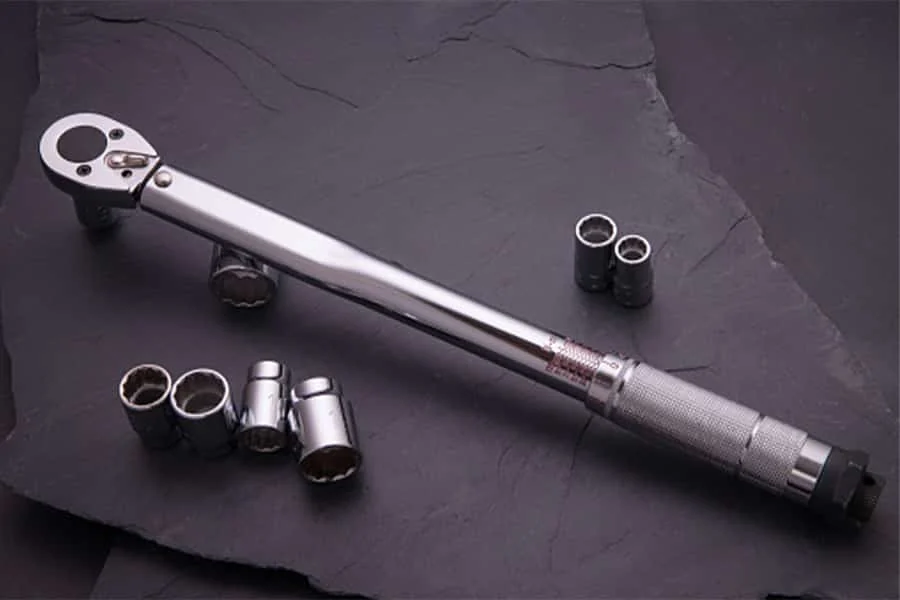
A torque wrench is a precision tool for accurate mechanical work. Among other uses, it controls and sets the tightening torque of vehicle components, making it a useful addition to your toolbox. But what is a torque wrench and what does it actually do? This guide answers those questions.
Torque wrench: the model in our catalogue
For tightening wheels and everyday fasteners, we selected the Wera Click-Torque C 3 Lock. Wera states a range of 40 to 200 N·m with a 1/2 inch square drive, an accuracy of ±3 % according to DIN EN ISO 6789-1:2017-07 and a Torque Lock function that also lets you loosen with the same tool.
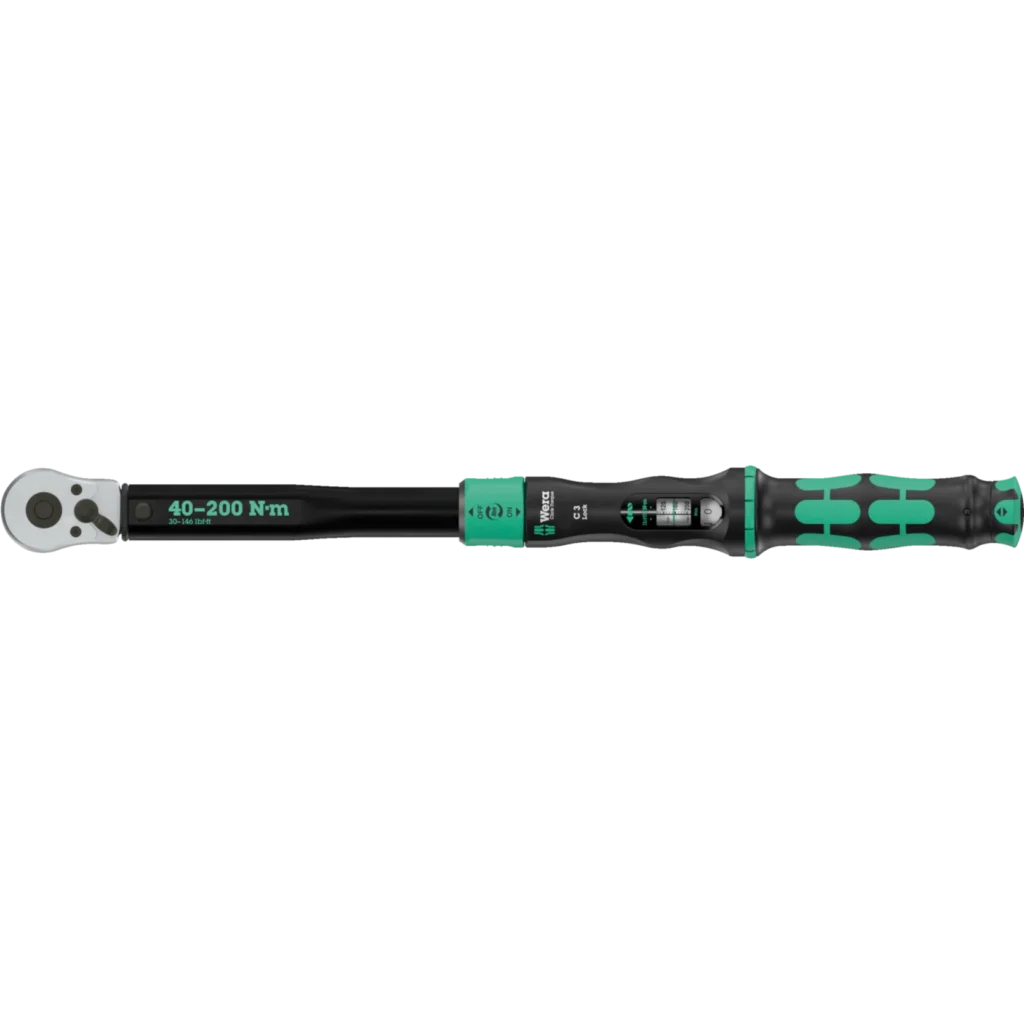
Wera Click-Torque C 3 Lock: 1/2 inch torque wrench 40-200 N·m
A click-type torque wrench for tightening wheels and fasteners to the specified torque, with a lockable setting.
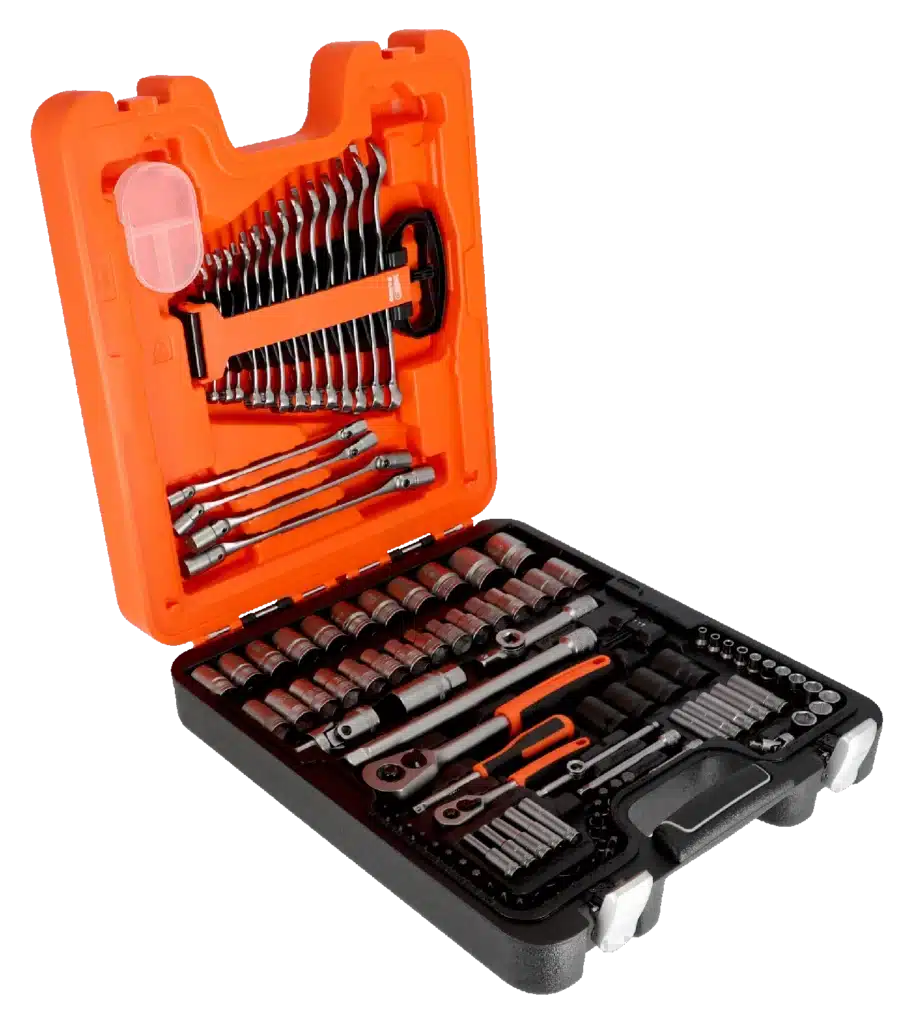
Bahco S108: 108-piece socket and spanner set
A case that brings together the main tools for manual fastening and tightening in the workshop.
For sockets, the Bahco S108 set includes 1/2 inch drive pieces, the same size as this wrench’s square drive.
Contents
- What is a torque wrench and what is it used for?
- How does a torque wrench differ from a standard ratchet?
The different types of torque wrench:
- First, what is a click-type torque wrench?
- What is a direct-reading torque wrench?
- Finally, what is a digital torque wrench?
How do you use a torque wrench?
- The tool’s units of measurement
Which torque wrench should you choose?
- Usage tips and precautions
What is a torque wrench and what is it used for?
Mechanical work requires the right tools for accurate results. One example is knowing how to tighten a bolt, screw or nut. There are often specific requirements to follow.
You will usually find these instructions in the technical specifications for your equipment and components. These specify the value to which parts should be tightened (= tightening torque).
Ignoring this value creates several risks. For example, a component may not be secured properly, or you may damage the mechanical part.
This can affect how it works and may even be dangerous. An inadequately tightened connection can come loose. Consider, for example, a car wheel with fixings that are too loose or, conversely, overtightened.
In the first case, the part may work loose. In the second, it may be damaged, distorted or even broken.
That is why it is important to follow the manufacturer’s instructions for tightening mechanical components.
Once you have checked those instructions, you need the right precision tool for the job: a torque wrench.
How does a torque wrench differ from a standard ratchet?
A standard ratchet performs the same basic task as a torque wrench: tightening bolts, nuts and screws. However, this conventional tool has no torque setting.
You operate it by hand, without an indication of the torque reached. The result is therefore less precise, and you may tighten the part too much or too little.
What is a click-type torque wrench?
Torque wrenches with a click mechanism can be adjustable or have a fixed setting. They give an audible signal when the required torque is reached, so you do not need to watch a gauge continuously while tightening. They are simple, affordable and practical to use.
What is a direct-reading torque wrench?
Torque wrenches with a direct-reading display are less convenient although they are reliable. They display the torque as you tighten, so you need to monitor the reading while working. Their price remains affordable.
What is a digital torque wrench?
Torque wrenches with digital or electronic measurement are very practical, reliable, accurate and easy to use. They have a small display and keypad linked to a strain gauge. An audible warning indicates that the set torque has been reached. These wrenches can, however, be very expensive.
How do you use a torque wrench?
- To set the wrench, start with the adjustment mechanism unloaded and follow the manual so that the setting is correct.
- Next, work from the lower value of the specified adjustment range.
- Finally, set the wrench to the required torque. When ready, tighten until you hear the click. This indicates that the required torque has been reached. Stop tightening as soon as you hear the signal.
The tool’s units of measurement
To tighten parts, set the tool to the recommended value. The quantity you need to set is the tightening torque expressed in newton metres (N·m).
To find the correct tightening torque for a part, check the manufacturer’s recommendations. You can also consult a Revue Technique Automobile (RTA), a French vehicle workshop manual containing, among other information, the specified tightening torques for the different parts of your car.
Which torque wrench should you choose?
Be cautious about buying a used torque wrench: its accuracy may have deteriorated and cannot be confirmed without checking it. To verify it, you need a torque tester.
If you prefer a new tool, one option is a click-type torque wrench from Facom. Choose an appropriate range and verified accuracy for precise, efficient work.
For trainee mechanics and professionals, a more expensive model with suitable accuracy may also be worth considering: a digital torque wrench. A suitable model can be accurate and easy to use, making it well suited to frequent use.
Good to know:
- There are also torque screwdrivers for smaller parts that require less tightening torque. Their values may be expressed in centinewton metres (cN·m).
- When buying, make sure the wrench’s range covers the minimum and maximum torques you need.
Usage tips and precautions
- After using an adjustable mechanical wrench, return it to the storage setting specified by its manufacturer, often the lowest scale value, to avoid leaving the mechanism unnecessarily loaded.
- Do not use the tool to undo parts unless the manufacturer explicitly permits it. The wrench is primarily intended for controlled tightening. This helps prevent overloading or damaging the tool.
- If you need to monitor torque during removal, for example when undoing a glow plug, follow the manufacturer’s limits and instructions. Check beforehand that the tool is approved for that task and for torque measurement during anticlockwise rotation.
- A torque wrench cannot correct a fastener that has already been overtightened. Follow the specified procedure for initial and final tightening.
- Look after the tool and avoid dropping it: impacts can affect the measuring mechanism.